Titles with a link have their own page with more detail. Click Content or Impact under an entry to open it.
Peer-reviewed papers
-
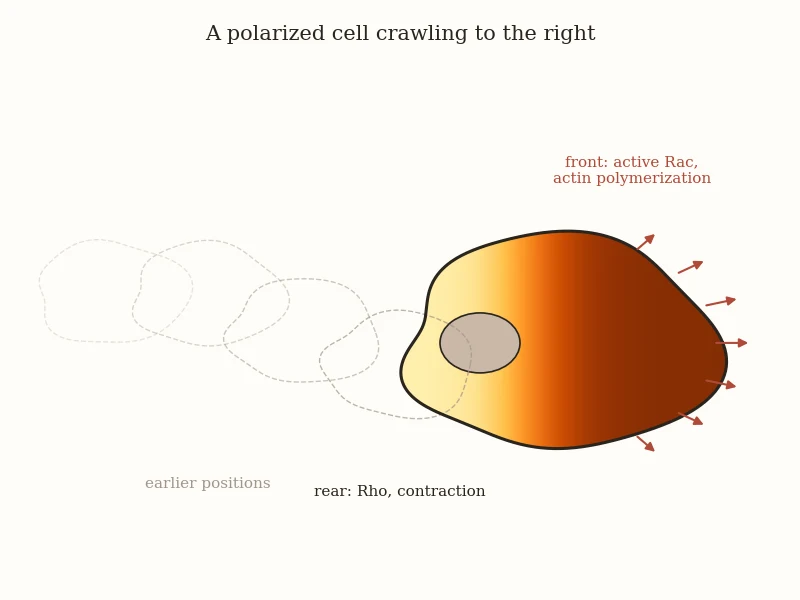
Jupiter Algorta, Ali Fele-Paranj, Jack M. Hughes, Leah Edelstein-Keshet
Cold Spring Harbor Perspectives in Biology 17(12), a041796 () · DOI · PMC
Content
A survey of how eukaryotic cells move, from the subcellular level (actin waves, polarity) to single-cell migration and to collective behavior of many cells. Each level is illustrated with simulations.
Impact
A single entry point to the modeling literature on cell motility, and a case for building models in shared open-source software (such as Morpheus) so they can be reused and checked.
-
Theranostic digital twins: Concept, framework and roadmap towards personalized radiopharmaceutical therapies
Hamid Abdollahi, Fereshteh Yousefirizi, Isaac Shiri, Julia Brosch-Lenz, Elahe Mollaheydar, Ali Fele-Paranj, Kuangyu Shi, Habib Zaidi, Ian Alberts, Madjid Soltani, Carlos Uribe, Babak Saboury, Arman Rahmim
Theranostics 14(9), 3404 () · DOI · PDF
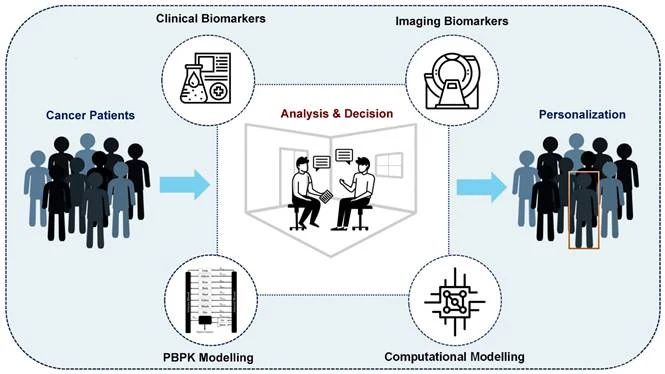
Figure: Fig. 1 of the paper, CC BY 4.0.Content
Lays out what a theranostic digital twin (TDT) is: a patient-specific computer model made of a physiologically based radiopharmacokinetic (PBRPK) model, a radiobiological optimizer, and an immunological modulator, fed by the patient’s imaging and clinical data.
Impact
A roadmap for moving radiopharmaceutical therapy away from “one dose fits all”, including virtual clinical trials run on digital twins before treating real patients.
-
Model-Informed Radiopharmaceutical Therapy Optimization: A Study on the Impact of PBPK Model Parameters on Physical, Biological, and Statistical Measures in ¹⁷⁷Lu-PSMA Therapy
Hamid Abdollahi, Ali Fele-Paranj, Arman Rahmim
Cancers 16(18), 3120 () · DOI
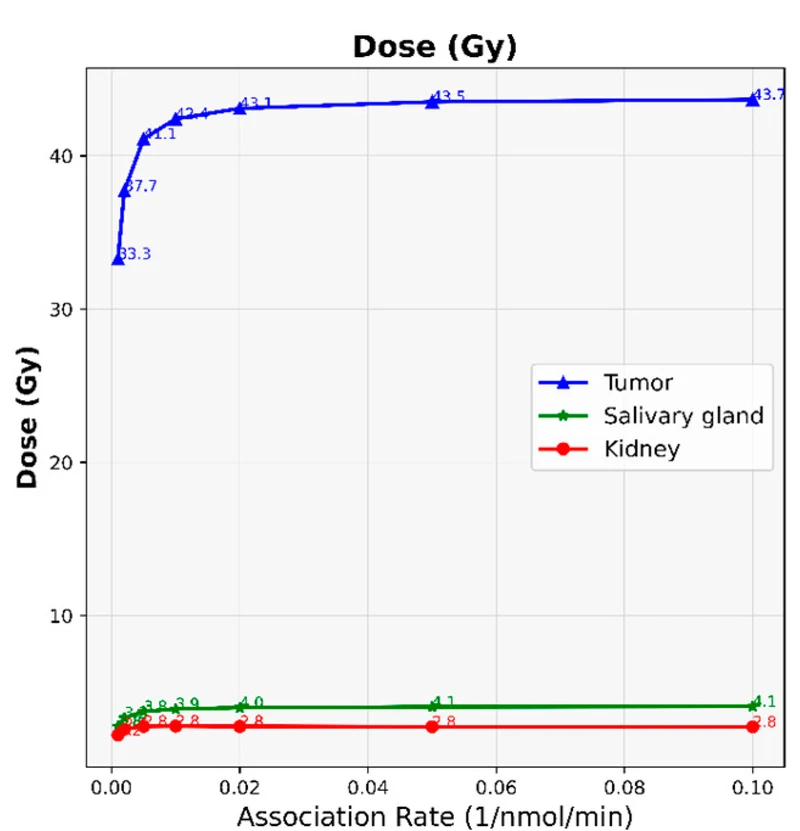
Figure: Fig. 1 of the paper, CC BY 4.0.Content
Varies one PBPK parameter at a time for ¹⁷⁷Lu-PSMA therapy and tracks time-integrated activity, absorbed dose, and biologically effective dose (BED) in tumors and organs.
Impact
Shows which knobs matter: a faster association rate raises tumor dose with little effect on other organs, internalization lowers tumor and kidney dose, serum protein binding lowers dose everywhere, and receptor density and ligand amount drive tumor uptake.
-
Ali Fele-Paranj, Babak Saboury, Carlos Uribe, Arman Rahmim
EJNMMI Radiopharmacy and Chemistry 9, 6 () · DOI · PMC · Correction
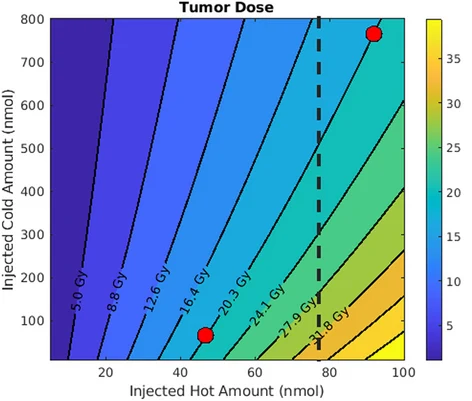
Figure: Fig. 1 of the paper, CC BY 4.0.Content
A whole-body PBRPK model (more than 150 ODEs) written with a “reaction graph” notation that keeps it modular. Used to study what happens when radiolabelled (hot) and unlabelled (cold) ligands compete for the same receptors, when the activity is split into several injections, and when the drug binds to albumin.
Impact
Doubling the injected activity does not double the dose: the relation is non-linear. Multi-bolus injections raise organ doses but give no differential gain for tumors, while a higher albumin affinity does. These are design questions that can be answered in silico before any patient is treated.
-
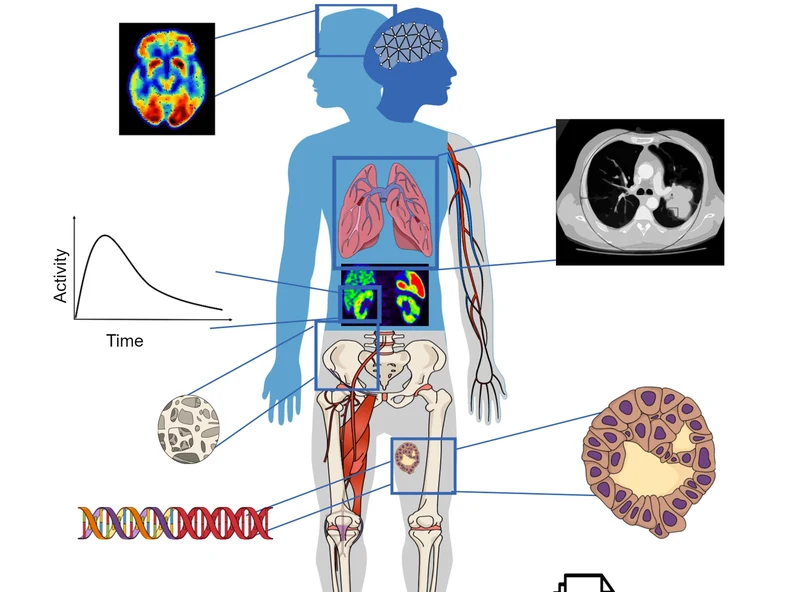
Theranostic digital twins for personalized radiopharmaceutical therapies: Reimagining theranostics via computational nuclear oncology
Arman Rahmim, Julia Brosch-Lenz, Ali Fele-Paranj, Fereshteh Yousefirizi, Madjid Soltani, Carlos Uribe, Babak Saboury
Frontiers in Oncology 12, 1062592 () · DOI
Figure: Fig. 1 of the paper, CC BY 4.0.Content
A perspective on bringing computational modeling into nuclear oncology: build a digital twin of each patient from their pre-therapy scans and use it to plan the therapy.
Impact
Introduced the theranostic digital twin idea that the later roadmap paper and the PBRPK work build on.
-
Free-Space Optical Neural Network Based on Optical Nonlinearity and Pooling Operations
Hoda Sadeghzadeh, Somayyeh Koohi, Ali Fele-Paranj
IEEE Access 9, 146533–146549 () · DOI
Content
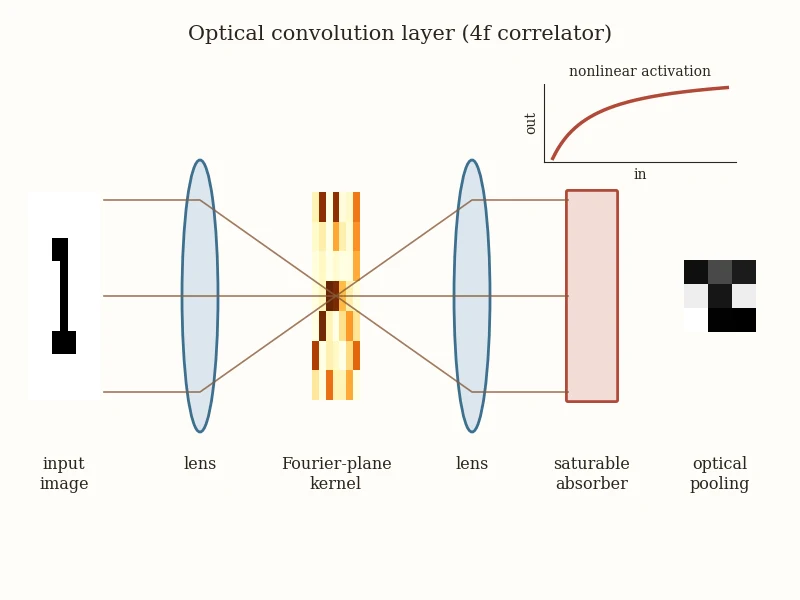
A convolutional neural network built with light: convolutions in 4f correlators, a saturable absorber as the nonlinear activation, and optical average and motion pooling. Put together as an optical version of AlexNet (OP-AlexNet).
Impact
Shows that the nonlinearity and pooling, not just the convolutions, can be done optically, reaching 99.25% on MNIST, 83.76% on Cats vs Dogs, and 72.82% on CIFAR-10.
Conference papers
-
Enhancing dose predictions in RPTs by applying machine learning to time-activity curve features: a simulation study using PBPK modeling
Hamid Abdollahi, Ali Fele-Paranj, Arman Rahmim
Journal of Nuclear Medicine 65 (suppl 2), 242104 (), SNMMI Annual Meeting
Content
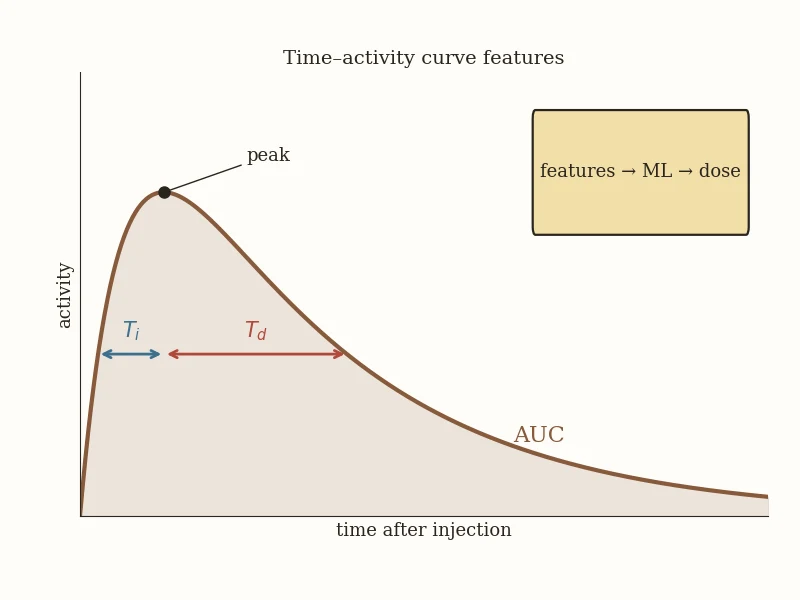
Simulates ¹⁷⁷Lu-PSMA therapy with a PBPK model and asks whether features of a pre-therapy dynamic PET time-activity curve, fed to machine-learning models, can predict the therapy dose.
Impact
Points to pre-therapy imaging (for example with ⁶⁴Cu) as a practical way to predict and personalize the dose.
-
Radiobiological-guided radiopharmaceutical therapy: radiopharmacokinetic parameter optimization using PBPK modeling
Hamid Abdollahi, Ali Fele-Paranj, Babak Saboury, Carlos Uribe, Arman Rahmim
IEEE Nuclear Science Symposium, Medical Imaging Conference and Room Temperature Semiconductor Detector Conference (NSS MIC RTSD) · DOI
Content
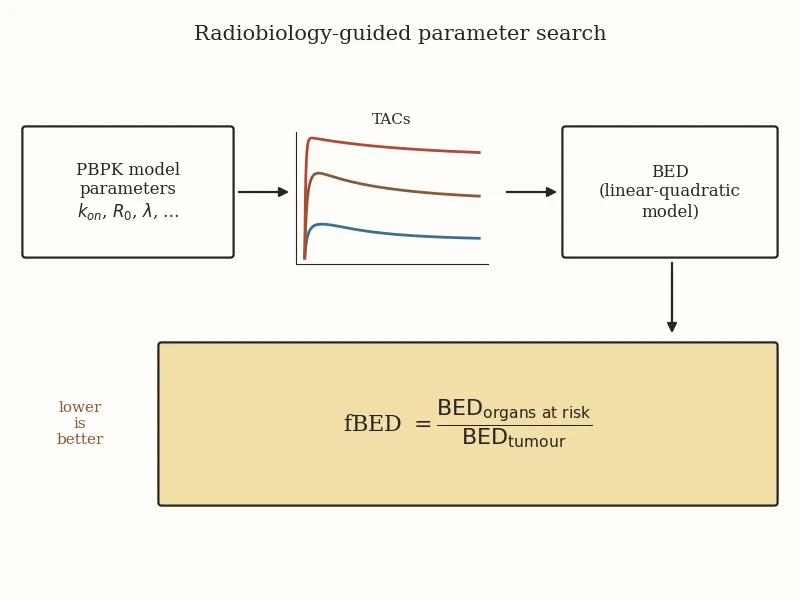
Ranks PBPK parameters by how much they change the biologically effective dose (BED) to tumors.
Impact
Tumor volume, ligand amount, and receptor density matter most (receptor density alone changes the BED 30 to 40 fold), while the association rate changes it by only a few percent.
-
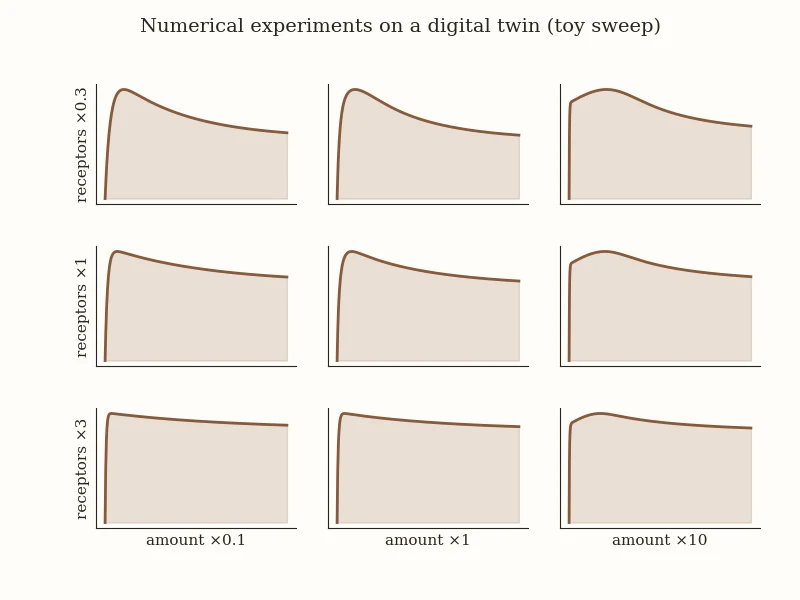
Theranostic Digital Twins Laboratory (TDTLab): a Platform for Numerical Experimentation with PBPK Models for Optimization of RPTs
Ali Fele-Paranj, Carlos Uribe, Babak Saboury, Arman Rahmim
Journal of Nuclear Medicine 64 (suppl 1), P1419 (), SNMMI Annual Meeting · Abstract
Content
An open-source platform for running numerical experiments (parameter sweeps, what-if scenarios) on PBPK models of radiopharmaceutical therapies.
Impact
Makes in silico experiments on therapy design easy to set up and repeat, without rewriting the model each time.
-
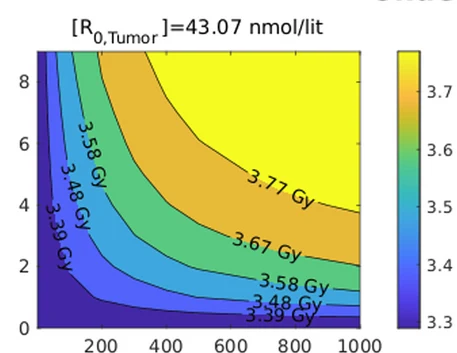
In Silico Investigation of The Effect of Multi-Bolus Injections in Absorbed Doses to Organs and Tumors in RPTs
Ali Fele-Paranj, Carlos Uribe, Hamid Abdollahi, Elahe Mollaheydar, N. Zakariaei, M. S. R. Siddiqui, Babak Saboury, Arman Rahmim
Journal of Nuclear Medicine 64 (suppl 1), P1422 (), SNMMI Annual Meeting
Figure: from the follow-up journal paper (Fig. 6), CC BY 4.0.Content
Splits the same total activity into several injections and compares the absorbed doses to tumors and organs at risk.
Impact
Multi-bolus injection reduces receptor saturation and raises the dose to tumors and organs alike, so it is not a differential enhancer. Its benefit grows with tumor size.
-
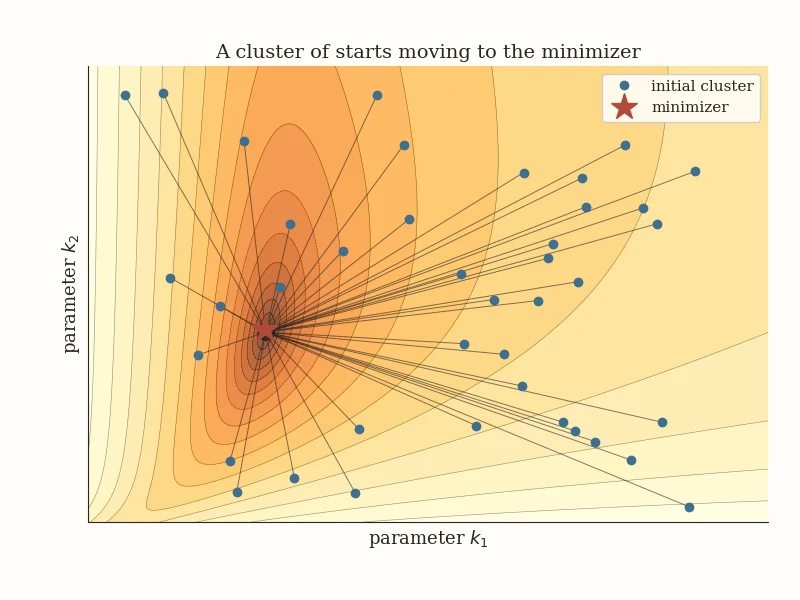
Using the cluster Gauss–Newton algorithm to estimate theranostic pharmacokinetic model parameters
N. Zakariaei, Ali Fele-Paranj, Hamid Abdollahi, Arman Rahmim
Journal of Nuclear Medicine 64 (suppl 1), P1449 (), SNMMI Annual Meeting
Content
Fits pharmacokinetic model parameters with the cluster Gauss–Newton method, which starts from many initial guesses at once instead of one.
Impact
Reveals when the data cannot pin down a parameter (many different parameter sets fit equally well), which matters before trusting a patient-specific model.
-
Towards non-tracer kinetic modeling: our past returning through the future
Arman Rahmim, Hamid Abdollahi, Ali Fele-Paranj, K.-N. Lee, Babak Saboury, Carlos Uribe
Journal of Nuclear Medicine 64 (suppl 1), P1447 (), SNMMI Annual Meeting
Content
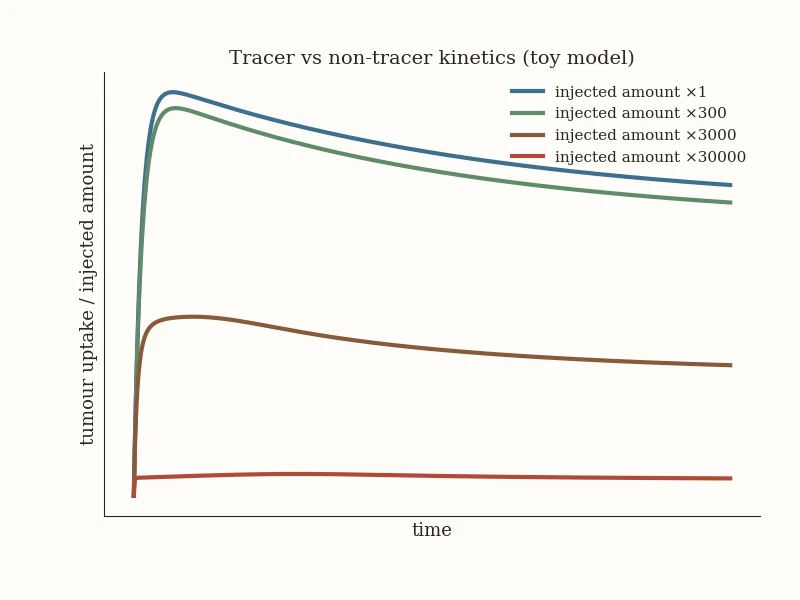
In therapy the injected ligand amount is large enough to occupy receptors, so the usual tracer kinetic models no longer hold. Compares tracer and non-tracer models on ¹⁷⁷Lu time-activity curves.
Impact
Tracer models can fit the curves well and still be wrong. Models with hot/cold competition for receptors should be used for therapies.
-
Theranostic Digital Blueprint Predicts Higher Therapeutic Efficacy using Radiopharmaceuticals with Higher Albumin Affinity
Ali Fele-Paranj, Carlos Uribe, François Bénard, Arman Rahmim, Babak Saboury
European Journal of Nuclear Medicine and Molecular Imaging 50 (suppl 1), S40 (), EANM Congress (oral)
Figure: from the follow-up journal paper (Fig. 10), CC BY 4.0.Content
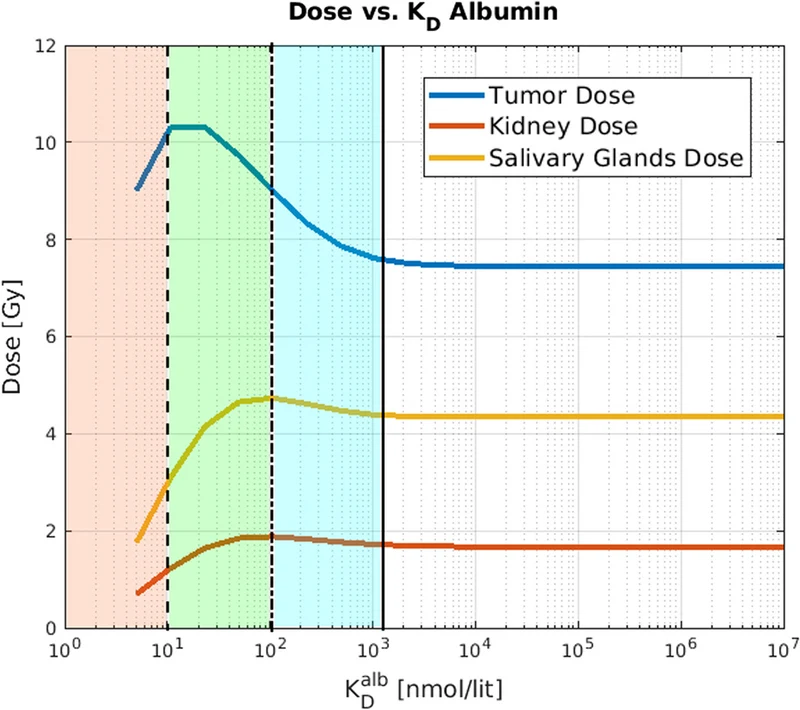
Adds albumin binding to the PBRPK model and varies the albumin affinity of the radiopharmaceutical.
Impact
Higher albumin affinity keeps the drug longer in the blood and gives tumors a larger dose relative to organs at risk, a design direction for new radiopharmaceuticals.
-
Modular model architecture for radiopharmaceutical therapy planning: PBRPK implementation
Ali Fele-Paranj, Julia Brosch-Lenz, Carlos Uribe, Arman Rahmim, Babak Saboury
Journal of Nuclear Medicine 63 (suppl 2), 3197 (), SNMMI Annual Meeting
Content
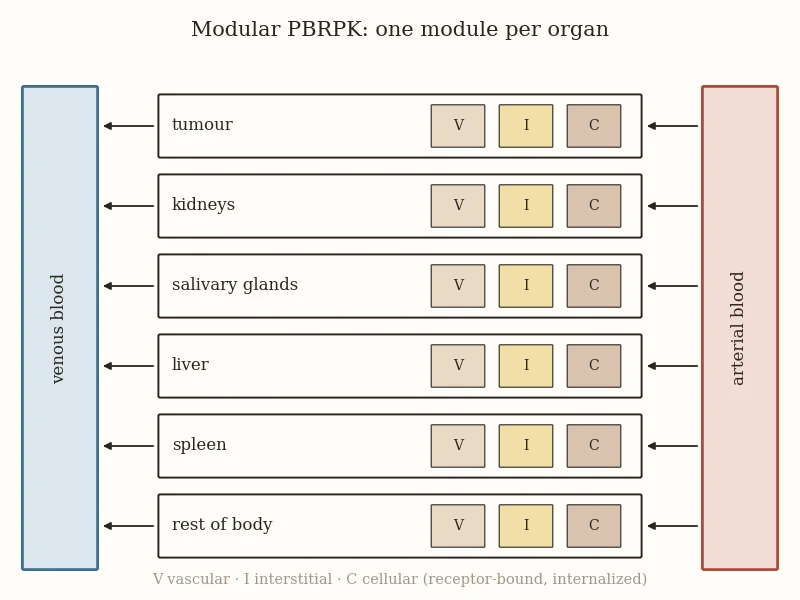
A modular way of building PBRPK models: each organ is a module with the same internal structure, and modules are connected through blood flow.
Impact
Adding an organ, a tumor, or a new binding process becomes a local change instead of a rewrite of the whole model.
-
Non-linearities in the transition from imaging radiotracers to therapeutic radiopharmaceuticals
Ali Fele-Paranj, Julia Brosch-Lenz, Carlos Uribe, Babak Saboury, Arman Rahmim
Journal of Nuclear Medicine 63 (suppl 2), 2821 (), SNMMI Annual Meeting
Figure: from the follow-up journal paper (Fig. 4), CC BY 4.0.Content
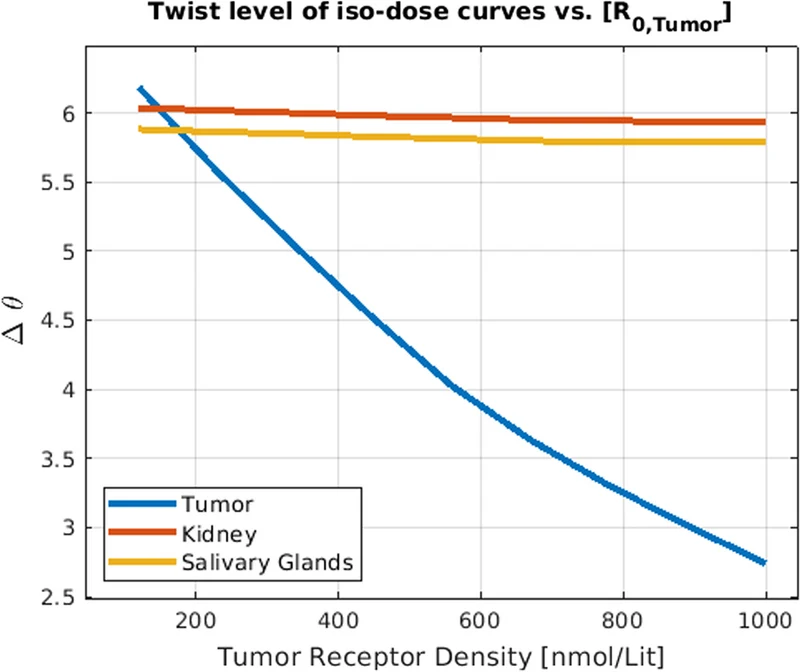
A 19-organ PBRPK model of ¹⁷⁷Lu-DOTATATE, used to ask how well a low-amount imaging scan predicts a high-amount therapy.
Impact
Specific activity controls how linear the relation is. Iso-TIA curves show that a high time-integrated activity in the tumor can be reached with less injected activity.
-
Open-source, modular, high-computational-throughput PBPK modeling fine-tuned for optimization of RPT
Ali Fele-Paranj, Carlos Uribe, Babak Saboury, Arman Rahmim
European Journal of Nuclear Medicine and Molecular Imaging 49 (suppl 1), S398 (), EANM Congress
Content
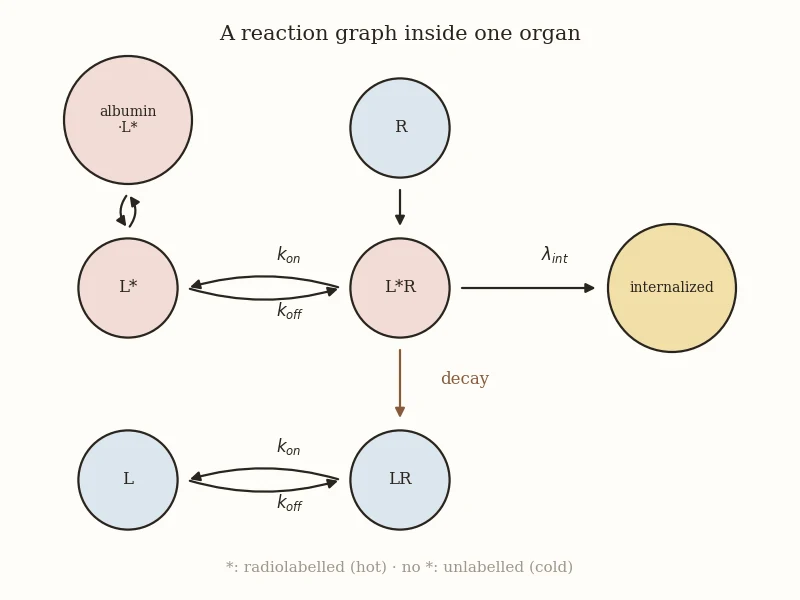
An open-source PBPK code built for speed, so that thousands of therapy scenarios can be simulated, with each organ’s chemistry written as a reaction graph.
Impact
The computational base for the later studies on non-linearities, multi-bolus injections, and albumin binding.